Sustainable Hospitality: Unlocking business value through eco-certification
May 5, 2025Updated 12 August 2026
With over 90% of travelers actively seeking sustainable accommodations, hotels must evolve to meet this growing demand by investing in low-emissions practices that protect natural attractions, reduce resource consumption, and lower operating costs. Laying the foundation for these initiatives starts with measuring your full carbon footprint, including scope 1, 2, and 3 emissions. Establishing this baseline not only identifies the biggest opportunities for reduction but also allows hotels to track emission reductions over time.
To build trust with guests and partners, hotels can then transparently disclose their climate action progress through recognized certifications like ClimatePartner certified. In this article, we’ll explore the most effective initiatives hotels are adopting to reduce their footprint, and how a recognized certification is key to converting your efforts into business value.
Conserve energy and reduce waste
Investing in sustainability is essential for the travel industry to protect the beautiful destinations that attract guests and minimize the environmental impact of tourism.
Hotel operations are resource intensive. This is especially true when it comes to water, energy, and waste management. From heating and cooling systems to irrigation, kitchens, spas, pools, laundry, and guest rooms, hotels can consume significantly more water than their local community. This resource use not only drives up operating costs but also contributes to scope 3 emissions, particularly through outsourced services like laundry and supply deliveries. Water reduction measures, such as installing more efficient showerheads and bathroom fixtures and encouraging guests to reuse linens and towels during their stay, help address both direct consumption and broader supply chain impacts. These initiatives can reduce laundry loads by up to 17%, supporting overall emissions reduction efforts.
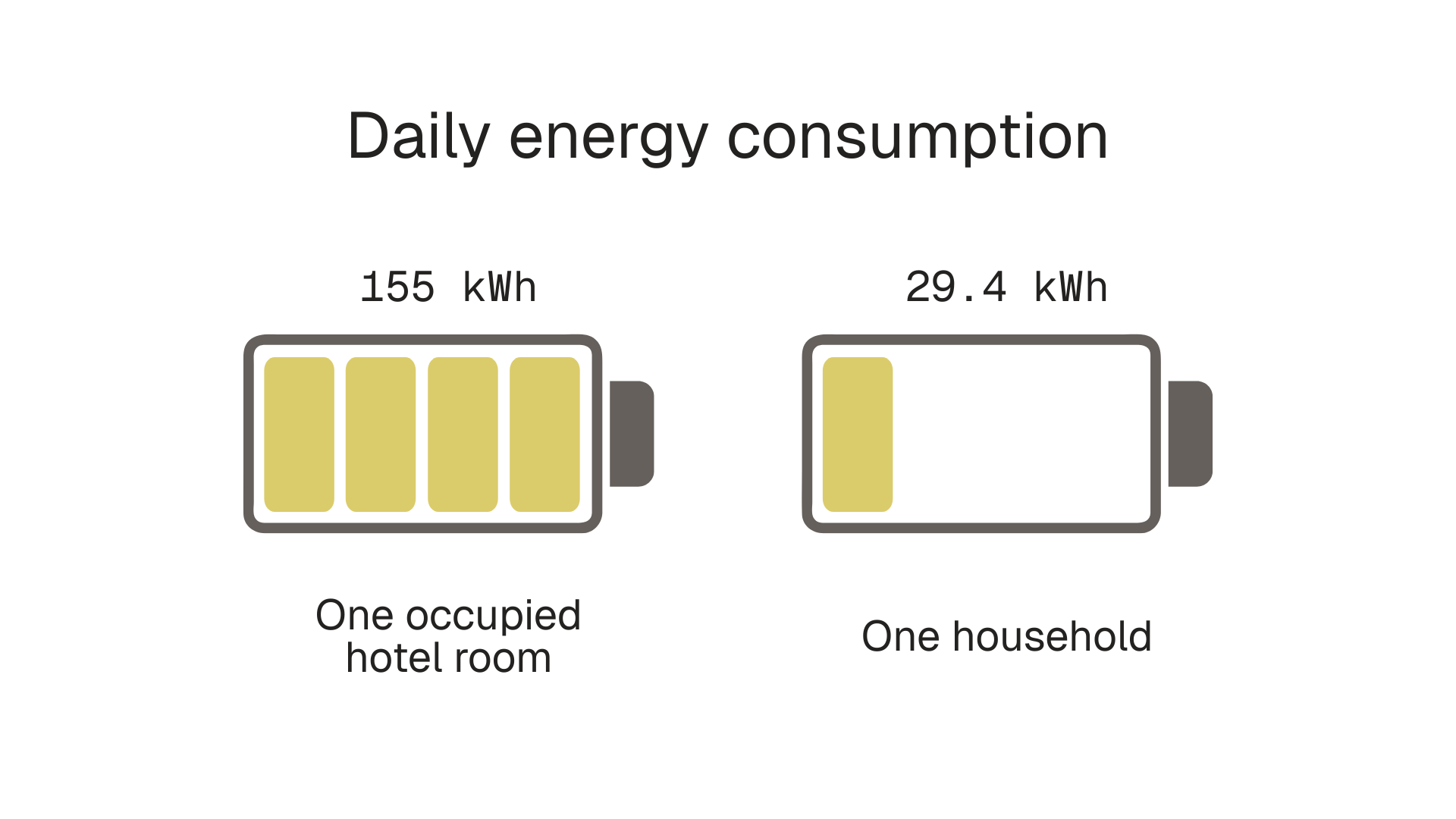
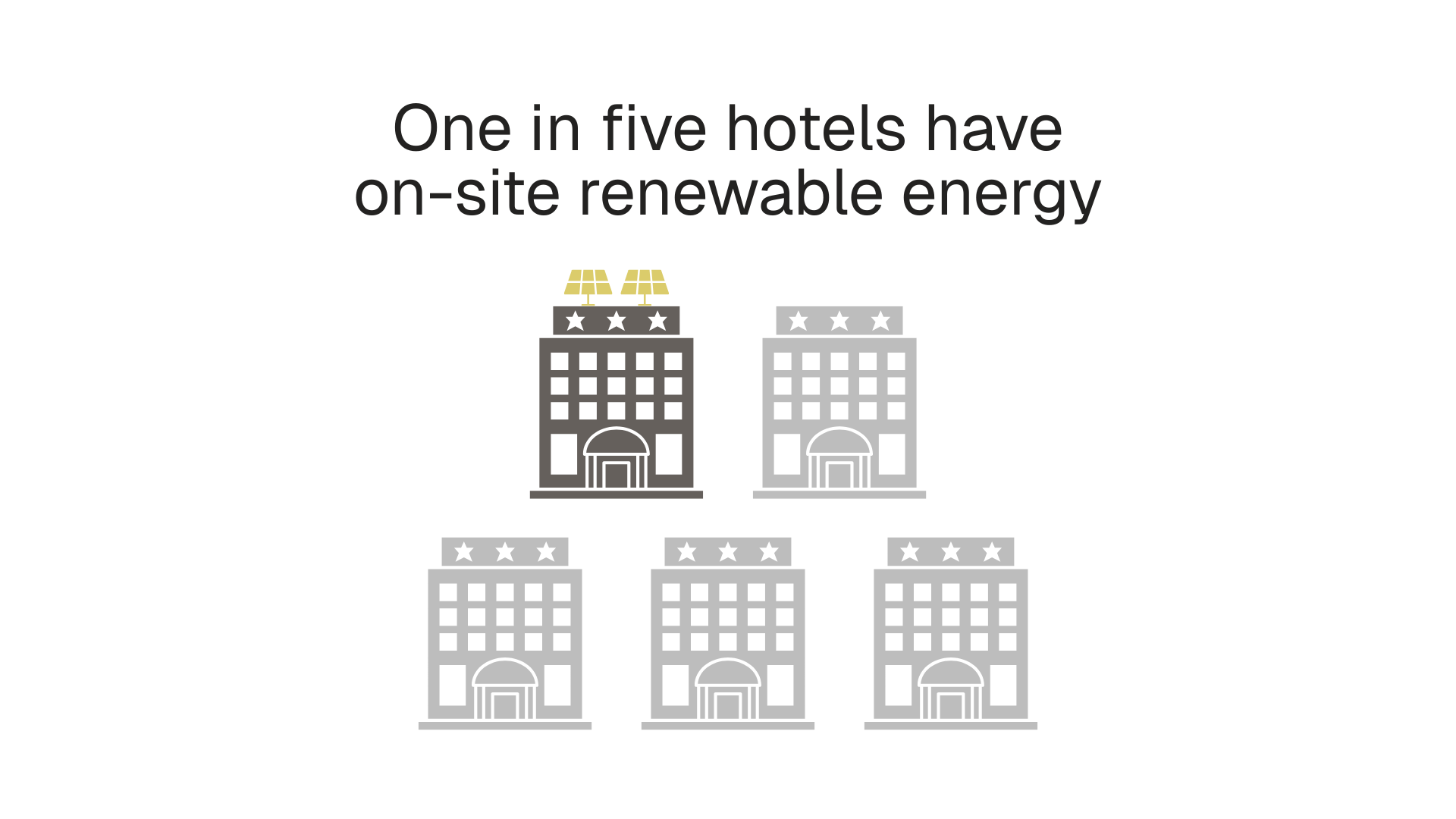
Operating 24 hours a day, 365 days a year, hotels consume significant amounts of energy, often sourced from high-polluting fossil fuels. In the United States, a single occupied hotel room consumes approximately 155 kWh of energy per day, over five times the consumption of the average U.S. household. This heavy reliance on purchased electricity results in substantial scope 2 emissions, which account for greenhouse gases associated with the generation of purchased energy. Transitioning to renewable energy not only reduces these emissions but also secures a more reliable and sustainable energy future. Currently, one in five hotels worldwide have adopted on-site renewable energy generators, while others are utilizing Renewable Energy Certificates (RECs) to support clean energy without changing utility providers.
Sustainability drives cost savings for hotels
Sustainability isn’t just the ethical choice—it’s a smart business move. In the United States, hotels spend nearly $2,200 per room each year on water and energy alone. Upgrading to energy-efficient lighting, cooling systems, and bathroom fixtures can reduce emissions by 30–40%, with upfront investments quickly recouped through long-term utility savings.
Hotels with strong sustainability strategies not only reduce expenses but also attract a growing segment of eco-conscious travelers. More travelers are actively seeking sustainable hotels and are willing to pay up to 38% more to make their trip more sustainable.
Businesses are also embracing this shift, with many implementing stricter travel policies that prioritise low-emission transport modes and lodging. This shift in consumer preferences presents hotels with the unique opportunity to position their sustainability efforts as a value-added amenity that travelers are willing to pay a premium for.
Build trust through transparency
A recent survey found that 59% of travelers want the ability to filter hotels by sustainability features, highlighting the importance of certifications in building consumer trust. Booking platforms like Google Travel have responded by introducing filters for “eco-certified” hotels—those that meet internationally recognized environmental and social responsibility standards.
To ensure credibility, certifications are verified by respected third-party advisory groups, such as Travalyst. Travalyst is a global coalition founded by Prince Harry, Duke of Sussex, to accelerate climate action across the travel industry. Travalyst works with major platforms including Google Travel, Booking.com, Expedia, and more to approve certifications that meet its rigorous sustainability criteria. In 2024, ClimatePartner certified became an officially recognized Travalyst-approved certification.
Through the BeCause platform, which is used by Travalyst partners such as Google Travel and Booking.com to verify sustainability labels, ClimatePartner certification is now visible on both travel platforms. On Google Travel and Booking.com, ClimatePartner certified accommodations are listed as "sustainability certified".
ClimatePartner certified for hotels
To become ClimatePartner certified, hotels follow a streamlined process. First data surrounding your operational emissions is collected with support of our software tool, and our experts calculate your hotel’s total emissions across scopes 1, 2, and 3. Next, we use your carbon footprint report as the baseline to set achievable emission reduction targets and identify opportunities to lower your footprint. Remaining emissions are addressed by contributing to verified climate projects.
Finally, once your emissions are measured, reduced, and the amount is used towards contributing to a climate project, ClimatePartner provides a unique certification label and climate-ID page to publicly showcase your sustainability efforts. Your information is submitted to BeCause, enabling Google Travel and other platforms to award your hotel the "eco-certified" label. Now, travelers using the filter will see your hotel listing, view your sustainability measures, and directly access your climate-ID page.
Your data will also be transmitted to the BeCause platform, so that your hotel is automatically marked with the "eco-certified" badge on Google Travel and the "sustainability certification" on Booking.com.
Create advantage through certification
Sustainable practices are no longer optional—they're a strategic advantage. By adopting renewable energy and efficient resource management, hotels can lower operating costs, reduce their environmental impact, and appeal to a growing base of eco-conscious travelers. With a trusted certification like ClimatePartner certified, hotels can transparently communicate their sustainability commitments.
According to the Booking.com Travel and Sustainability Report 2026, more than a third of travelers worldwide prefer to book accommodations with a third-party certification and 41% state that clear sustainability communication influences their booking decision. Sustainability is particularly relevant for the business travel segment: More than half of business travelers say their company has a sustainability policy for business trips.
With the Empowering Consumers Directive (EmpCo), all sustainability labels on the market must be based on an independent certification from 27 September 2026 onwards. Self-created labels without compliant verification will no longer be permitted. Those who already rely on a compliant system strengthen their credibility and stand out from the competition.
Is your hotel ready to make an impact?
