
Supply chain decarbonisation
One integrated solution for transparency and supply chain decarbonisation: supplier engagement and enablement, powered by Network, AI-enabled carbon calculations, and expert consulting.
Get in touchYour supply chain is your biggest climate challenge—
and your biggest opportunity
For most companies, scope 3 emissions account for 70–90% of their total carbon footprint. Yet the data behind supply chain emissions, especially scope 3.1 (purchased goods and services) is incomplete, inconsistent, and without the transparency needed for acting on supply chain emissions.
At the same time, the pressure is mounting
SBTi targets | require credible scope 3 targets and supplier engagement plans |
CSRD ESRS E1 | needs audit-ready greenhouse gas emissions data across value chains |
Supply chain emissions transparency
Corporate Carbon Footprint
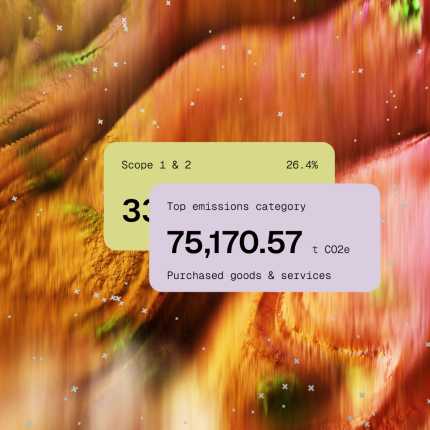
A full scope CCF built on activity-based data, over 50,000 emission factors, and audit-ready methodology, delivering a high-quality scope 3.1 calculation that reveals upstream hotspots.
Supply chain engagement
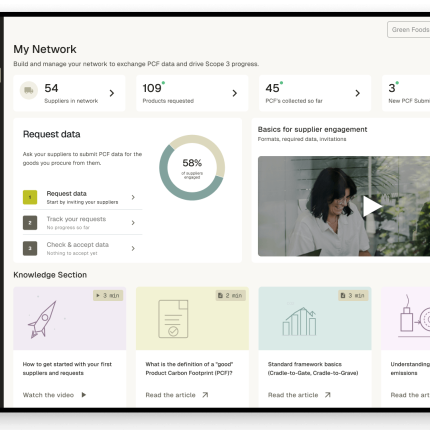
We help you set up a supplier engagement strategy for scope 3 emissions complexity, so that you know which suppliers to prioritise, which levers to pull, and how to manage progress effectively.

Supplier enablement
Through academies, trainings, and hands-on consulting, we help your suppliers build PCFs, improve data quality, and start their climate action journey, accelerating the transparency within the supply chain.
How supply chain decarbonisation works
Step by step process from baseline to measurable reduction.
Step 1: | Full scope 1–3 CCF: audit-ready, SBTi- and CSRD-aligned, with emissions hotspot analysis across your footprint. |
Step 2: | Invite suppliers to the Network Platform. Collect primary supplier data, reduction targets, and carbon footprints in one place. Supplier transparency with standardised data quality scoring. |
Step 3: | Academies, roundtables, and 1:1 consulting guide suppliers from generic estimates to primary data, helping them calculate, set targets and build reduction plans, accelerating your scope 3 progress. |
Step 4: | Enable your suppliers to upload or calculate PCFs using AI-supported automation, mass-data upload, and PACT-aligned data quality scoring, at a fraction of previous cost without compromising on data quality. |
Step 5: | Use granular, supplier-specific data to identify reduction levers and build a prioritised decarbonisation roadmap. Track progress against SBTi targets and continuously refine your approach. |
The outcomes that matter.
Show stakeholders you are activelty decarbonising
A full CCF with hotspot analysis gives you the evidence to show investors, boards, and customers that you understand your emissions and are taking structured action, not just reporting.
Decarbonisation
Move from averages to real supplier data
Most scope 3 calculations still rely on generic emission factors. Our hybrid approach enables suppliers to calculate PCFs and integrates that data directly into your footprint, replacing modelled estimates with primary data.
Transparency
Control costs across the supply chain
With AI-supported automation and degressive pricing, your suppliers can produce hundreds of credible PCFs with high data quality. As primary data flows through the Network Platform, transparency scales deep.
Efficiency
Scope 1, 2, and 3 Emissions Coverage
Measure your entire carbon footprint across direct, energy-related, and value chain emissions. Our calculator follows the Greenhouse Gas Protocol for complete, reliable results. This gives you a clear view of where your biggest climate impacts lie.
Measure

Network by ClimatePartner: Connecting buyers and suppliers
The ClimatePartner Network connects the supply chain: suppliers calculate their PCFs, buyers integrate the data into their scope 3 calculations. Every PCF replaces an estimate and makes the carbon footprint reliable.
Find out moreFrequently asked questions
Scope 3.1 is specifically Category 1: Purchased Goods and Services within the GHG Protocol's scope 3 framework. It covers the upstream emissions from the production of goods and services that a company buys: from raw materials to finished components.
Scope 3 is fragmented across hundreds of companies, often inconsistent in format and quality, and expensive to collect at product level.
GHG Protocol, SBTi, CSRD ESRS E1, and PACT. All scope 3 calculations are audit-ready.
It helps, but it's not required. Most companies begin with a CCF as the first step toward full scope 3 visibility.
For Amazon's Climate Pledge Friendly programme, please use the form on the programme page.
See all ClimatePartner offices.