Scope 3.1 primary data: Why your supply chain matters
June 16, 2026Scope 3.1: The weak spot in your carbon footprint
Scope 3 is the largest and most complex emissions category for most companies. According to the CDP, scope 3 accounts for around 75% of total corporate emissions on average. In sectors such as financial services, industrial goods, food and beverage, and agriculture, that share can reach up to 99%.
Scope 3 emissions do not originate within your own operations. They come from your suppliers via the production of raw materials, components, and products your company purchases.
This makes scope 3.1, “Purchased Goods and Services”, worth a closer look. For most companies, it’s the single largest line item in the corporate carbon footprint (CCF). That makes the supply chain the most powerful lever for meaningful emissions reduction.
Collecting scope 3.1 data is no longer optional
The pressure to calculate, and reduce, scope 3 emissions is growing.
The CSRD requires companies with more than 1,000 employees and annual revenues above €450 million to report on emissions across their entire value chain, including scope 3.
The Science Based Targets initiative (SBTi) requires companies to set a near-term scope 3 target in target setting when it exceeds 40% of total emissions scope 1–3 emissions. Near-term targets must cover at least 67% of scope 3 emissions; long-term net zero targets must cover 90%.
Building a reliable scope 3.1 footprint with primary data
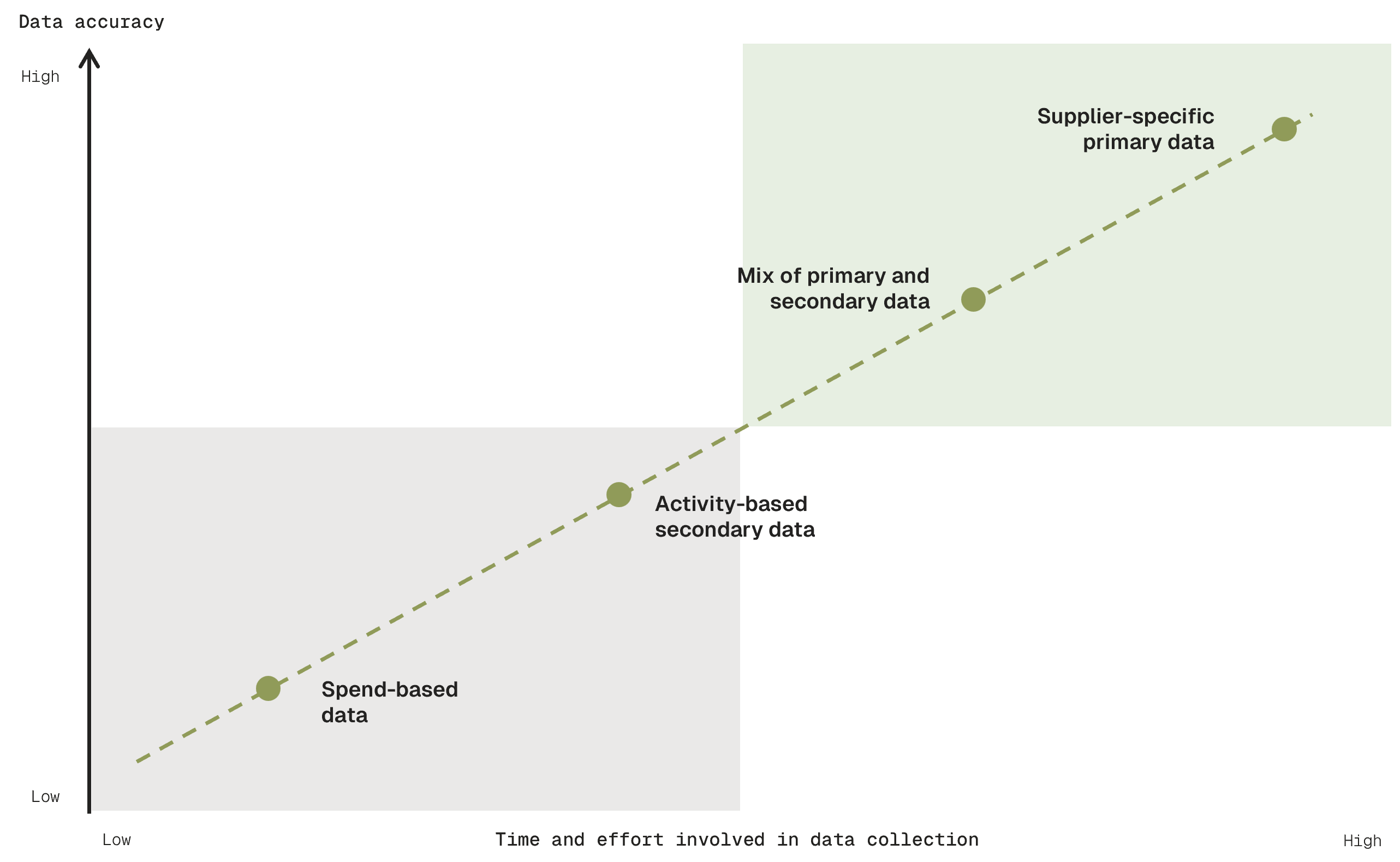
Companies calculating scope 3.1 emissions for the first time typically start with spend-based data or activity-based secondary data. This is methodologically sound and explicitly supported by the GHG Protocol.
Spend-based data: purchasing spend is multiplied by an emissions factor per euro. These factors come from scientific databases such as EXIOBASE and reflect industry averages. For example: a cosmetics company spends €500,000 per year on plastic packaging. Multiplied by the emissions factor for that category, the result is a first emissions estimate. Fast and scalable, but imprecise, because spend and actual emissions do not correlate directly, and factors are subject to fluctuation.
Activity-based secondary data: instead of spend, physical quantities form the basis for calculation. A cosmetics company purchases 200 tonnes of plastic for packaging per year and multiplies that volume by the emissions factor for plastic. This is more accurate than spend-based data because physical quantities better reflect actual consumption. But the emissions factor still describes only the average production process. Whether the packaging supplier uses renewable energy, or operates with above-average emissions-intensity, remains hidden.
Emission factors from databases are updated regularly and vary by source. This means emission values can shift from year to year, not because anything has changed in the supply chain, but because the underlying database value has changed. As a starting point, they are still useful: they show where the largest emissions, and therefore the largest reduction levers, sit in a footprint. But over the long term, supplier-specific primary data is the most reliable foundation.
Supplier-specific primary data is the highest quality tier. It shows the actual carbon footprint of a product, calculated on the basis of a supplier's real production data. That makes a real difference: progress in the supply chain becomes measurable and communication becomes credible. Suppliers start to understand their own emissions, set reduction targets, and implement reduction measures. The cosmetics company knows exactly whether its plastic supplier uses renewable energy and has optimised its processes and can target measures where they have an impact. Primary data turns a carbon footprint into the foundation for measurable decarbonisation.
When does primary data make sense?
- For instance, starting with suppliers that:
- account for more than 5–10% of scope 3.1 emissions
- come from an emissions-intensive category
- are strategically important or difficult to replace
- account for more than 20% of purchasing volume
- operate in sectors where customers or investors are already requesting product-level emissions data.
The challenge: Collecting primary data
The willingness is there. The reality of the supply chain is where it gets difficult.
Supplier data is rarely available at Tier 1 level and practically non-existent at Tier 2 or Tier 3. Even when companies actively request data from their suppliers, responses often come back incomplete, inconsistent, or incomparable. Many suppliers have never calculated a PCF. Collecting data manually, validating it, and converting it into a GHG Protocol-aligned calculation exceeds the capacity of most sustainability teams. Without support, data requests go unanswered.
With the right software and structured processes, companies can engage their suppliers efficiently, without disproportionately expanding internal resources.
Collecting primary data with Network by ClimatePartner
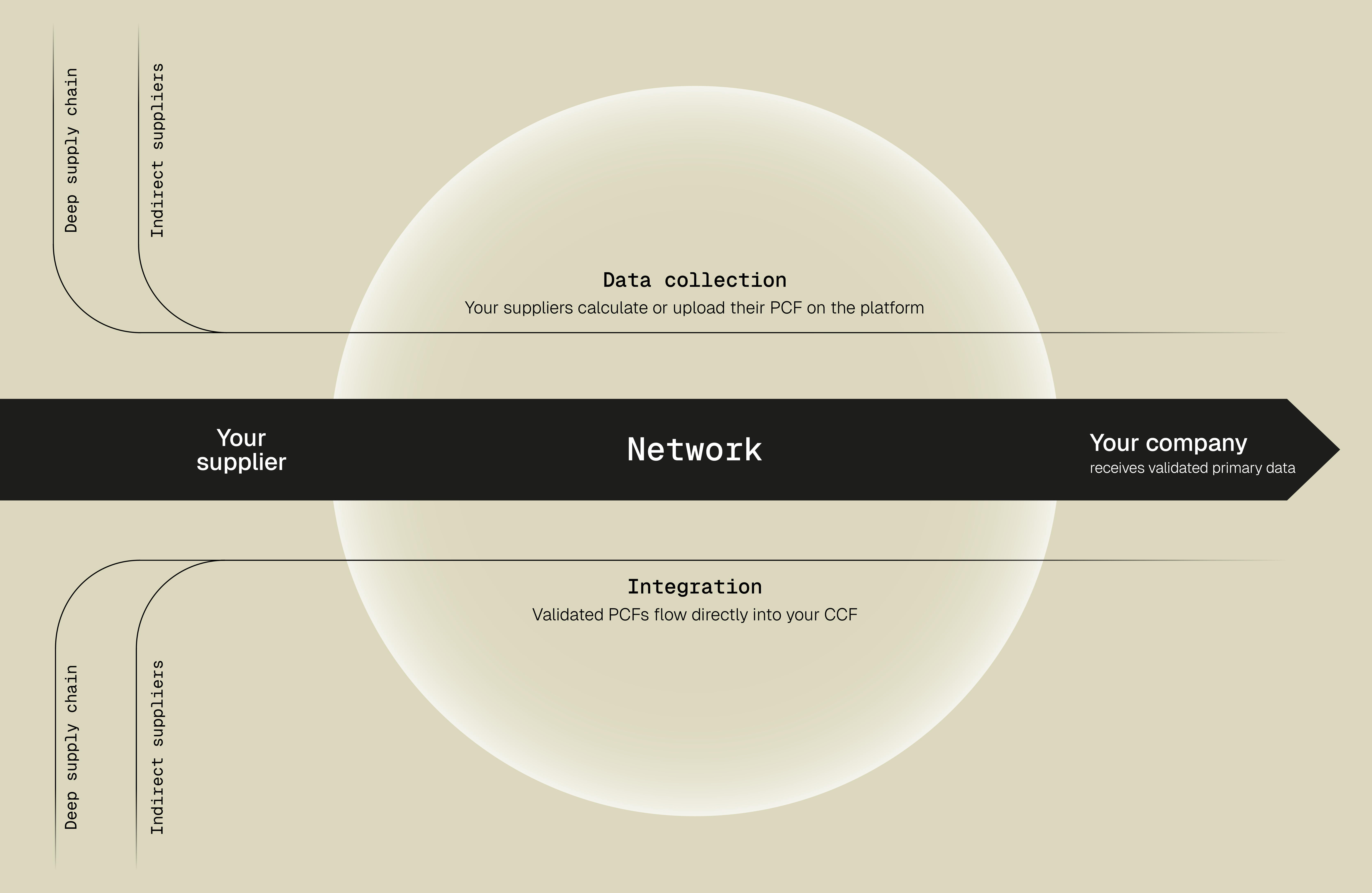
With Network by ClimatePartner, companies collect PCF data from their suppliers on one platform. The PCFs flow directly into the buyer's Corporate Carbon Footprint, turning supplier data at varying levels of maturity into actionable scope 3 data. This creates transparency over scope 3 emissions, makes data gaps visible, and enables informed purchasing decisions. Reduction measures can be targeted where emissions actually occur.
Suppliers who already have PCF data upload it directly to the platform and share it with their buyers. Where needed, ClimatePartner experts support the calculation of the Product Carbon Footprint.
Find out how Network helps companies collect structured supplier data and replace estimates with validated primary carbon footprints.
Practical guide to scope 3.1 reduction
Scope 3.1 is the single largest line item in the corporate carbon footprint for most companies. Reducing scope 3.1 emissions is challenging, however, because they arise at suppliers, not within your own operations. This guide shows how companies can progressively shift to supplier-specific primary data, reduce scope 3.1, and integrate their supply chain into their decarbonisation strategy.
Download for free